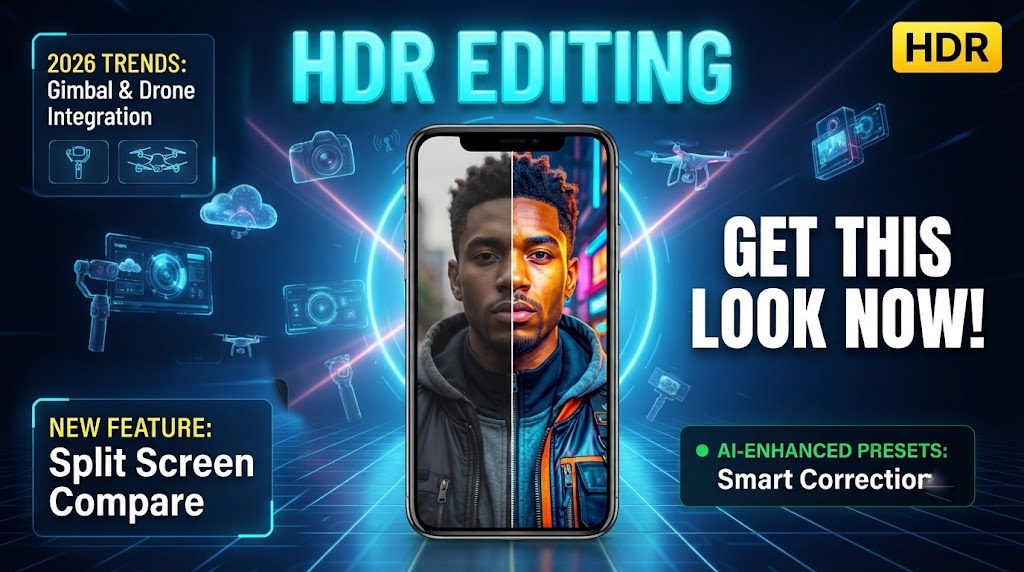
Edit photos with HDR Ultra High Quality Picture Editing App 2026. Enhance colors, details & lighting with AI. Create Photos stunning 4K edits in seconds.
Technology Improves Photo Quality
In 2026, photo editing has become much easier with AI tools. Many people want clear and detailed photos. For this reason, HDR Ultra High Quality Picture Editing App 2026 helps a lot. Basically, HDR combines different light levels in one photo. As a result, both dark and bright areas look visible. In addition, users can now adjust colors and lighting without professional software. This guide will explain how HDR works. It will also show key features and simple editing steps for mobile and PC.
HDR means High Dynamic Range. Simply put, it keeps details in shadows and highlights. For example, a sunset photo often has a bright sky and dark ground. However, normal editing forces you to choose one. On the other hand, HDR balances both areas. Moreover, 2026 AI apps can do this automatically. They analyze the image and then adjust tone and contrast. Therefore, the final photo looks more natural. Furthermore, these apps also enhance textures like skin and landscapes without making them fake.
Edit Photos with HDR
When you choose an HDR app, some features matter most. First, check for automatic tone mapping. This feature balances light and dark areas in one tap. Second, look for detail enhancement. It brings out textures without adding noise. Third, you need strong color tools. With these, you can control warmth and saturation separately. In addition, many 2026 apps include AI presets. These presets apply a full HDR look instantly. Finally, export quality is important. Apps with 4K export give sharper results for social media and printing.

You can edit HDR photos in a few simple steps. First, open your photo in the app. Next, apply the auto HDR preset to get a base result. Then, adjust the highlights slider to recover bright areas. After that, use the shadows slider to show details in dark parts. In addition, you can increase clarity to make textures pop. Also, adjust white balance so colors look natural. At the end, add a small amount of sharpening. Consequently, your photo will look detailed but not over-processed. Most 2026 apps also save these settings for future use.
Natural Looking HDR Photos
Sometimes HDR photos look too strong. To avoid this, start with small changes. Rather than moving sliders to 100, move them slowly. Also, pay attention to skin tones in portraits. Keep them warm and natural. Another tip is to use local adjustments. For instance, you can edit only the sky or only the ground. This gives more control. Furthermore, do not over-saturate colors. A natural HDR photo should look real with more detail. With practice, you will find the right balance for all types of photos.
Mobile cameras have improved, but they still struggle in tough light. Therefore, HDR apps help a lot on phones. With a 2026 HDR app, you can improve any phone photo. Most apps support both JPG and RAW files. If your phone shoots RAW, use it. RAW files keep more data for editing. In addition, many mobile apps offer batch processing. This means you can edit 20 photos with the same settings. As a result, creators can save time and keep a consistent style for Instagram or YouTube.

HDR for Mobile Photographers
Mobile cameras have improved, but they still struggle in tough light. Therefore, HDR apps help a lot on phones. With a 2026 HDR app, you can improve any phone photo. Most apps support both JPG and RAW files. If your phone shoots RAW, use it. RAW files keep more data for editing. In addition, many mobile apps offer batch processing. This means you can edit 20 photos with the same settings. As a result, creators can save time and keep a consistent style for Instagram or YouTube.
Desktop users get more control with PC and Mac apps. The bigger screen helps you see small details. Moreover, 2026 desktop tools often include layer support. With layers, you can blend HDR edits with other changes. In addition, PC apps support higher resolution exports like 4K. Another benefit is plugin support. Some apps work inside other editing software. This helps professionals keep one workflow. Overall, desktop editing works best when you need precision and advanced options.
AI and Automation in 2026 HDR Apps
AI is the biggest change in 2026. Instead of manual sliders, AI now detects the scene. For example, it protects the sky in landscapes. Similarly, it keeps skin smooth in portraits. Moreover, AI can remove noise when you lift shadows. Some apps even suggest edits based on your past photos. As a result, beginners get good results quickly. At the same time, pro users can still make manual changes. Thus, the mix of AI and manual tools makes these apps useful for everyone.
Even with good tools, people make mistakes. One mistake is pushing clarity too high. This creates halos around objects. Another mistake is oversaturating colors. This makes photos look unnatural. Also, too much sharpening adds grain. To avoid this, zoom to 100% while editing. In addition, always save a copy of the original photo. That way, you can return to it later. By following these tips, your HDR edits will look clean and professional.
Exporting and Sharing Your HDR Photos
After editing, you need to export correctly. For social media, 1080p or 2K works well. For printing, use 4K or higher. Most 2026 apps let you choose the format. JPG works for sharing. TIFF and PNG keep more quality. Also, check the color space. sRGB is best for web. Adobe RGB works better for print. Before posting, view the photo on phone and laptop. Sometimes colors look different on each screen. Once you confirm, you can share directly from the app.
HDR editing helps many types of users. For example, travelers can make vacation photos more vivid. Food bloggers can make dishes look better with good lighting. Real estate photographers can show both rooms and windows. Even students can use HDR for school projects. Because 2026 apps are easy, anyone can learn in minutes. At the same time, advanced users get all the controls they need. Therefore, HDR tools work for both casual and professional editing.
Keeping Your Photos Organized After Editing
First, look at the type of photo you want to edit. For example, landscapes need more sky and ground balance. Therefore, choose a preset that protects highlights. Next, for portraits, pick a preset that keeps skin tones soft. In addition, street photos often need more contrast and clarity. Most 2026 apps give you 5 to 10 presets to start. After that, you can adjust each slider manually. As a result, you get a custom look that fits your style. Finally, save your favorite settings. This way you can apply them to future photos in one tap.
After editing many photos, organization becomes important. For this reason, create folders by date or by project. Also, rename your files so you can find them later. Many HDR apps in 2026 now add tags automatically. For instance, they can tag “landscape” or “portrait” for you. Moreover, you can back up your edited photos to cloud storage. This keeps your work safe if your phone or PC crashes. In addition, keep both original and edited versions. That way you can compare or re-edit later. With good organization, your workflow will stay fast and stress.


